Thursday, May 17, 2012

Guava- the Health giver.

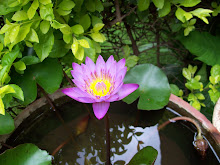
 The guava flower looks  delicate and beautiful.
The guava fruit is rich in vitamin C and fibre, besides having many other health giving qualities. The seeds of the guava fruit can cause stomach problems.
Although the guava is a native of the Americas, it has naturalised itself in India, so that it is hard to believe that it is not a native plant. Its fruit is used to make jellies and jams and juices. Its leaves are used in folk medicine to get rid of head lice.

Saturday, March 31, 2012

Wood Rose

The Wood Rose Argyreia nervosa is a native of India, although it is commonly called Hawaiian Baby Wood Rose. The plant is a cousin of the Morning glory, and its flowers resemble the morning glory flowers. It is only when they are fertilized, that they form the beautiful rose-like seed pods.
I found the vine growing wild on my walk recently. I was enchanted by the woody, rose shaped seed pods.
The flower itself is not as attractive as its cousin the ipomea.
The roots of this plant are used in Ayurvedic medicine.

Wednesday, March 14, 2012

Green Ice Crossandra

The rare aquamarine flowers of the Green Ice Crossandra Ecbolium ligustrium are called Neelambari in Kannada. It is also known as the Green Shrimp Plant. This wild flower is found in the slopes of the Western Ghats. I found this rare plant in the Campus of IIT Bombay, in Mumbai, which still boasts of some wild patches of forestland.
Tribal medicine men use theleaves of this plant to make a decoction for alleviating fever. The root is used in rheumatism.

Friday, January 20, 2012

Flame of the forest

Butea monosperma, which is also known as Flame of the forest,flowers in abundance in all forests throughout India in spring. It is called Palash in Sanskrit and Hindi, and Muttuga in Kannada. It is mentioned in the Ramayana, where Sita sees the flowering trees, and thinks some stretches of the forest were on fire. The leaves of this tree are made into leaf plates, which are said to impart health giving qualities to the food served on them.
Butea superba, a cousin of the Butea moosperma is used in Thai medicine .

Monday, December 12, 2011

Drynaria quercifolia


When you drive through the hills of the Western Ghats, you come across this fern clinging to some trees. This is the Drynaria quercifolia, a fern with sterile fronds, like the Staghorn fern. The locals say that this fern eventually kills its host tree. It is called Kage Rekke in Kannada, which means Crow's Wings. Whether there is truth in the fears of the locals or not, this fern is a beauty.
It has many medicinal uses too. Its leaves are used to alleviate fever and cough. It is also used to treat dyspepsia.

Saturday, December 3, 2011

Reinwardtia indica

One sees these bright yellow flowers in gardens during winter. It is the Basant, or Reinwardtia indica. This flower is also known as Pyoli in Gharwal. Being a native of the Himalayan foothills, this plant has many medicinal properties. It is used in Indian traditional medicine for the treatment of paralysis. The crushed leaves and stems of the plant are used to heal a suppurating wound.
The people of Gharwal associate Pyoli with a folk tale. According to the tale, Pyoli was a beautiful forest maiden, brought up by the plants, animals and birds of the forest. One day, a wounded prince got lost in the forest. Pyoli looked after him, and he fell in love with her. He married her and took her to his palace. But Pyoli missed her forest friends so much that she fell ill and died. The prince buried her in her beloved forest. After some time this plant with cheerful yellow flowers came up from the place she was buried.

Friday, November 11, 2011

Wild Lobelia

I saw these flowers growing in the jungle near the Sirimane Falls in the Western Ghats. When I went too near to smell it, one of the locals shouted a warning, saying it would make me retch!
The Dhaval, Lobelia nicoteanefolia is found extensively in the lower slopes of the Western Ghats. It is also known as the wild tobacco. All parts of the plant are poisonous, but like all native Indian plants, the Dhaval is also used in Ayurveda medicine , mostly for the treatment of asthma and bronchitis. The poisonous leaves can be smoked like tobacco. The plant contains the alkaloid lobeline.